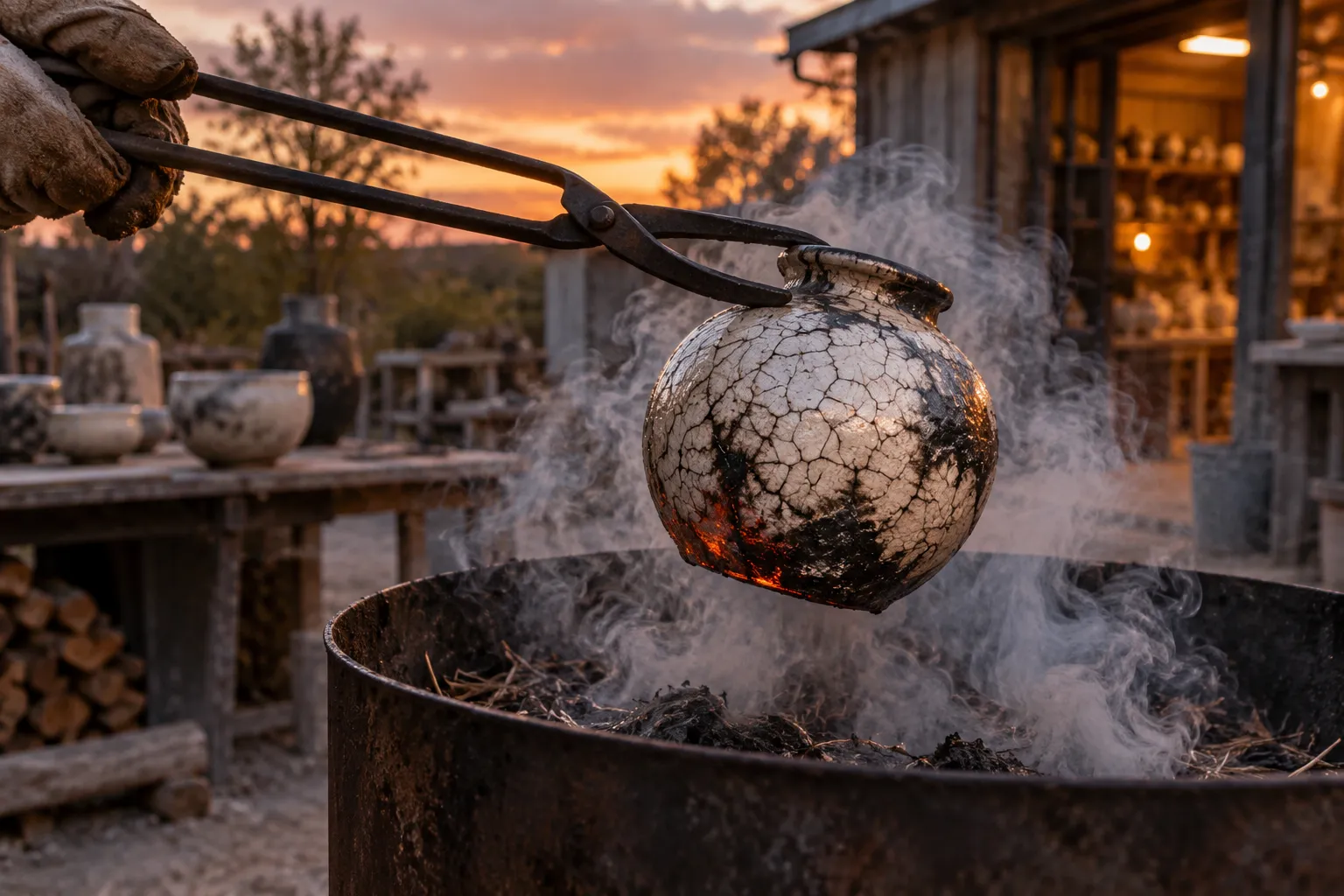
Raku is the most exciting firing we do. The pots come out of the kiln glowing orange, go straight into a bin of sawdust and burst into flame. If you have booked a Raku Weekend, or you are thinking about it, here is what the two days look like.
Six people, two days
There are only six places on each weekend. That way everyone gets a turn at every step, and nobody waits around in the cold. You do not need any experience. If you have never touched clay, that is fine. All the clay, glazes and firing are included.
Saturday: make and glaze
In the morning you make two or three small pots by hand, or choose from bisque-fired pots we have ready. Raku is hard on pots, so we use an open, gritty clay that copes with sudden heat. After lunch you glaze. Raku glazes look chalky and dull in the bucket, so trust me on the colours.
Sunday: fire
The kiln sits outside in the yard. When it reaches temperature we lift each pot out with long tongs and put it in a metal bin of sawdust and newspaper. It catches fire at once. We put a lid on, and the smoke turns every bare patch of clay black and pulls the crackle out of the glaze. Then a quick dip in water, a scrub with a scouring pad, and you see what the fire did.
What to bring
- Old clothes in natural fibres, and closed shoes. Sparks and synthetics do not mix.
- A warm layer. We work outside on Sunday whatever the weather.
- Long hair tied back. We supply gloves, masks and safety glasses.
What you take home
You take home every pot you fired. Raku pots are for looking at, not for food or water, because the clay stays porous. They make lovely vases for dried flowers and a good story at every dinner.
You can pay for your place at once, or in three monthly payments. The pricing page shows how both work. If you have questions before you book, send me a message.