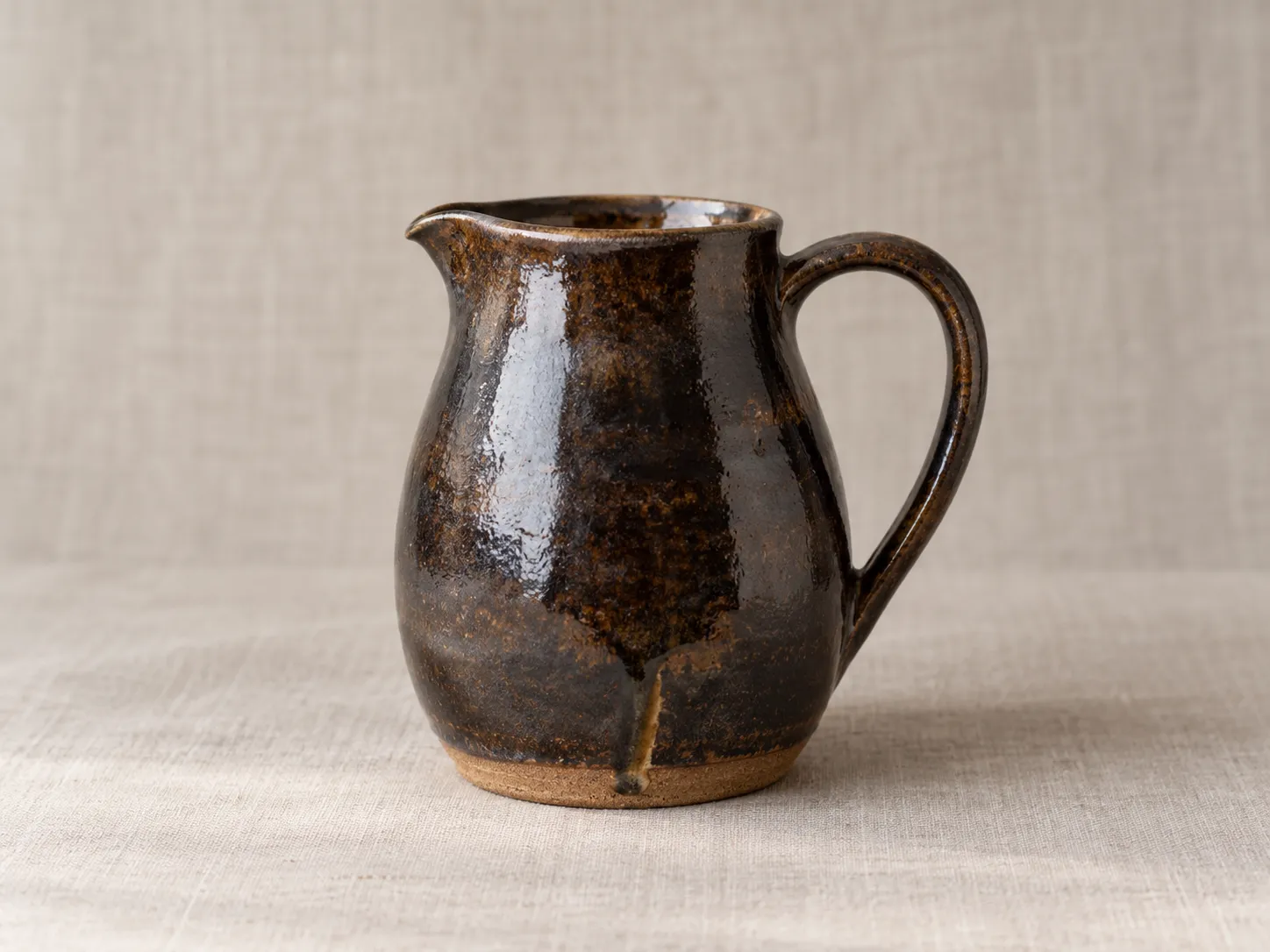
Every time I open the kiln, a few pots come out not quite right. They are not broken and they are not dangerous. They are just not what I meant to make. Those pots become seconds, and they go on the Seconds shelf for less.
What makes a second
A second has a small flaw that you can see, but that does not change how it works. The usual ones are:
- a glaze that ran a little further than planned and pooled at the foot;
- a tiny pinhole or a bare patch where the glaze crawled back;
- a colour that came out darker or lighter than the rest of the set;
- a handle that sits a few millimetres off centre.
If a pot leaks, has a crack, or has a sharp edge, it is not a second. It goes in the bin, and I do not sell it.
Why they cost less
Pots in a set should match, and a first is a pot I would put my name on in any company. A second has the same clay, the same firing and the same work in it, but it does not match its neighbours. Pricing it lower is fair to you, and it is better than smashing a perfectly useful jug.
Right now the Seconds Jug is on the shelf at £36 instead of £48. The tenmoku broke a little paler at the rim than on the rest of the batch. It pours just as well as its brothers and sisters.
Still good to use
Every second is fired to full stoneware temperature, so it is food safe and goes in the dishwasher like the rest of our tableware. Many people prefer them. A pot with a run of glaze down one side has a story, and you can see the fire in it.
Seconds come and go with each firing, so the shelf changes every few weeks. Have a look in the shop, and if you would like to know what a flaw looks like before you buy, ask me and I will send you a close-up picture.